

Year 9 & 10 students
Australian Curriculum v9.0
Health & Physical Education (AC9HP10P09): Critique health information, services, and media messaging about relationships, lifestyle choices, and health behaviours to evaluate their influence on individual attitudes and actions.
Health & Physical Education (AC9HP10P10): Plan, justify, and critique strategies to enhance personal and community health, safety, relationships, and wellbeing.
- This lesson is designed as a flexible tool.
- Teachers can adapt and build upon.
- 60-minute lesson.
- Stand alone.
- Customise to fit the unique needs of the classroom.
Health and Physical Education
Nutrition, Food Design, Recipe, Health, AC9HP10P09, AC9HP10P10
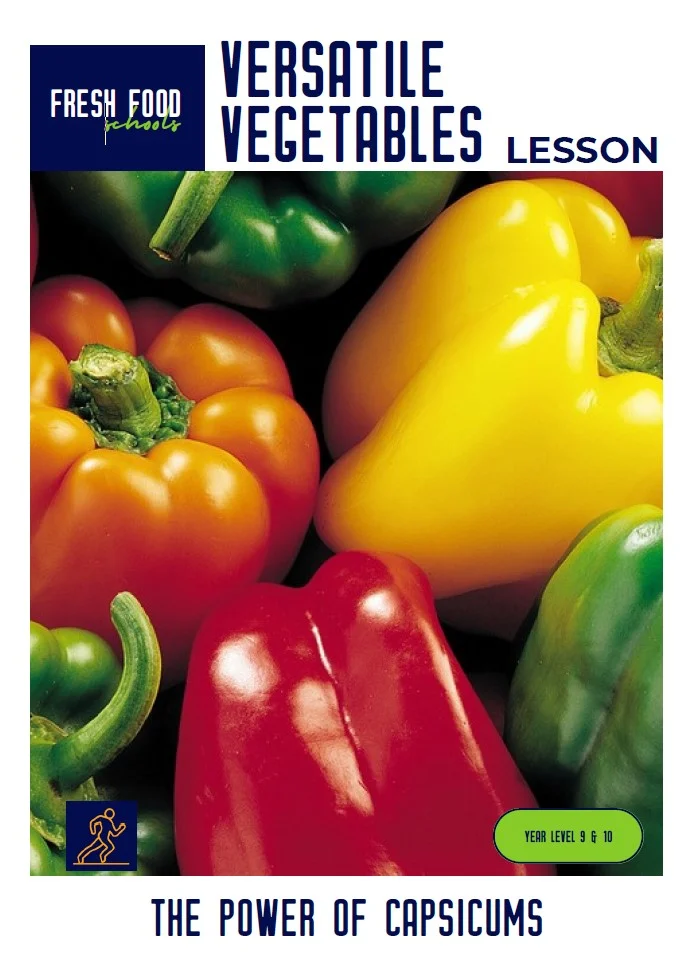
The Power of Capsicums lesson, part of the Versatile Vegetables program, teaches students to connect nutrition education with media analysis and community health promotion. By focusing on capsicums as a case study, students learn to critique food advertising, understand the role of colourful vegetables in a balanced diet, and create strategies for improving the health of their school community. The lesson fosters critical thinking, collaboration, and real-world application.
 Lesson Objectives
- Critique health information and media messaging about lifestyle choices (e.g. nutrition) to evaluate their influence on attitudes and behaviours.
- Plan and justify strategies to enhance personal and community health, safety, relationships, and well-being.
Key Concepts Taught
- Nutrition & Health: Capsicums are high in vitamin C, A, antioxidants, and fibre.
- Media Literacy: Identifying persuasive techniques in food advertising and critically assessing health claims.
- Health Promotion: Designing inclusive and engaging strategies to improve community health.
- Behavioural Influence: Understanding how media and health education affect food choices and wellbeing.
- Practical Life Skills: Applying knowledge through cooking, community activities, and critical evaluation.