

Year 9 & 10 students
Australian Curriculum v9.0
Design & Technologies (AC9TDE10K04): Analyse and make judgements on the ethical, secure and sustainable production and marketing of food and fibre enterprises
Design & Technologies (AC9TDE10K05): Analyse and make judgements on how the sensory and functional properties of food influence the design and preparation of sustainable food solutions for healthy eating
- This lesson is designed as a flexible tool.
- Teachers can adapt and build upon.
- 60-minute lesson.
- Stand alone.
- Customise to fit the unique needs of the classroom.
Design & Technologies
Sweet corn, media messaging, nutrition, sustainability, ethical marketing, healthy eating, campaign design
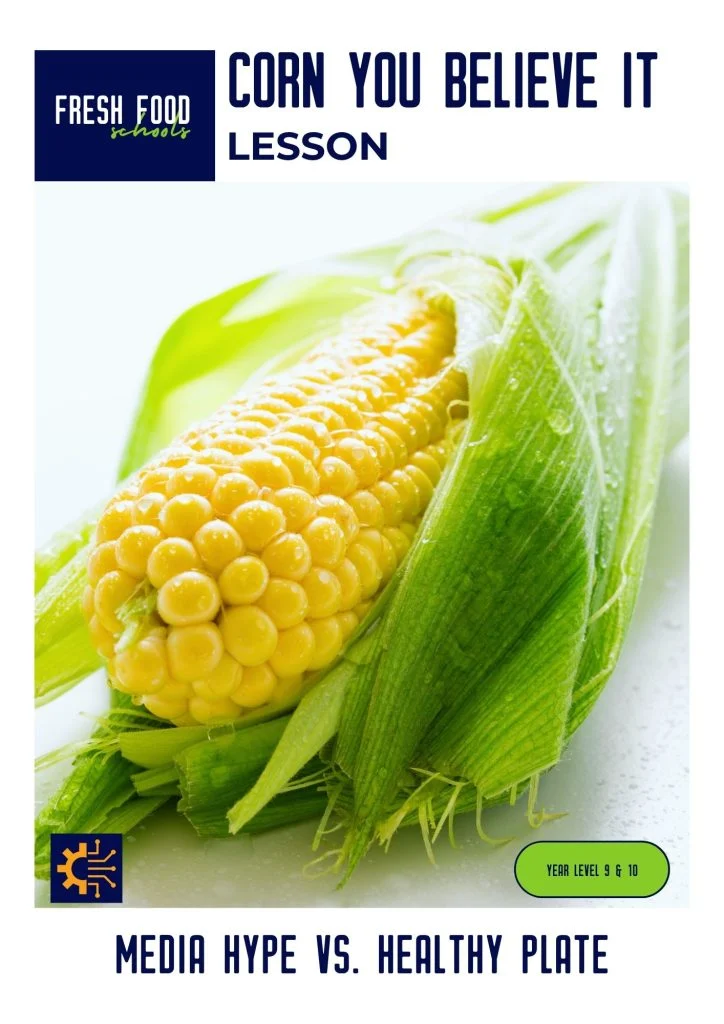
The Media Hype vs. Healthy Plate lesson asks students to think critically about how sweet corn is presented in the media and how this affects our perceptions and choices. By examining the hype versus the scientific reality, students deepen their understanding of nutritional value, agricultural sustainability, and how marketing influences healthy eating habits. Students investigate nutritional data, evaluate sustainability claims, and develop campaigns to promote corn as part of a balanced, sustainable diet.
Lesson Objectives
- Critically analyse media claims about sweet corn (e.g., ‘superfood’ hype vs. nutritional reality).
- Investigate sustainable farming practices and ethical marketing in sweet corn production.
- Design a balanced meal incorporating sweet corn, considering sensory appeal and sustainability.
Key Concepts Taught
- Media Literacy: Identifying and evaluating fact versus fiction in health claims about sweet corn and understanding how marketing shapes consumer choices.
- Nutritional Science: Examining the nutritional strengths of fresh versus processed corn, including vitamin, sugar, and fibre content.
- Sustainability & Food Systems: Exploring how sweet corn is grown and harvested sustainably, and evaluating the impact of buying local, fresh, frozen, or canned produce.
- Campaign and Communication Skills: Designing and presenting creative campaigns to clearly communicate healthy eating messages, address myths, and promote sustainable choices.
- Critical Comparison: Using nutritional data and credible sources to inform health decisions and campaign development, while also considering the social and environmental implications of different food options.