

Year 7 & 8
Australian Curriculum v9.0
Science (AC9S7U01): Investigate the role of classification in ordering and organising the diversity of life on Earth and use and develop classification tools, including dichotomous keys.
- This lesson is designed as a flexible tool.
- Teachers can adapt and build upon.
- 60-minute lesson.
- Stand alone.
- Customise to fit the unique needs of the classroom.
Science
Botanical, Biological Classification, Kingdom, Family, Genus, Species, Brassica, AC9S7U01,
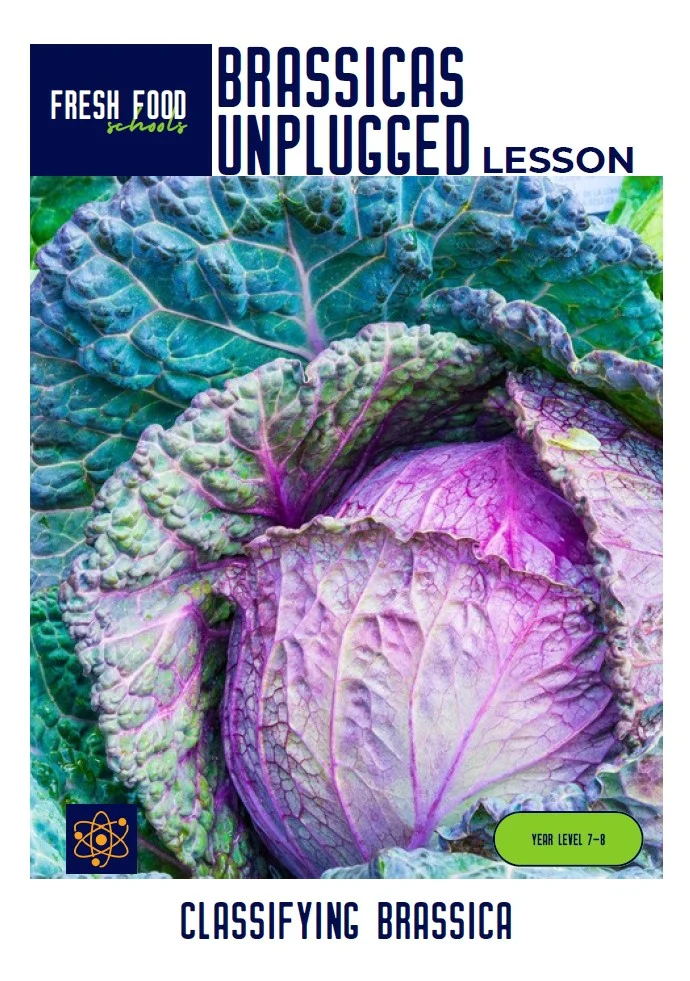
The Classifying Brassica lesson, part of the Brassicas Unplugged program, combines plant science, agriculture, and nutrition education. By learning how to classify Brassica vegetables using scientific taxonomy and dichotomous keys, students gain insight into plant diversity, farming strategies, and healthy eating. The lesson supports scientific literacy and sustainability awareness in a practical, engaging format.
 Lesson Objectives
- Understand botanical classification principles.
- Construct and apply dichotomous keys to classify brassicas.
Key Concepts Taught
- Biological Classification: Kingdom, Family, Genus, Species, Variety.
- Dichotomous Keys: Step-by-step identification tools based on observable traits.
- Agriculture and Sustainability: How taxonomy supports crop management, pest control, and food security.
- Nutrition and Health: Brassicas offer a range of vitamins, minerals, and antioxidants with health benefits.
- Food Systems Awareness: Recognising the links between plant science, farming practices, and dietary choices.